Why Your Compliment Landed Wrong — And What That Tiny Japanese Word Reveals About It
You Meant Well. So Why Did It Get Weird?
Here's a scene a lot of Americans have lived through. You're at a dinner party, or maybe a work event, and someone shows you something they made — a dish, a presentation, a piece of art. You say, genuinely, "This is amazing. You're so talented." And instead of the smile you expected, you get a kind of flinch. A quick shake of the head. Maybe even an apology.
You walk away confused. They walk away uncomfortable. Nobody wins.
This isn't about bad intentions. It's about two completely different operating systems running on the same conversation — and Japanese has a word that sits right at the center of that collision.
Enter Hazukashii — And Why It's Not Just "Embarrassed"
Most dictionaries will tell you hazukashii (恥ずかしい) means "embarrassed" or "shy." And sure, that's part of it. But the word carries a weight that English doesn't quite hold.
Hazukashii isn't just the feeling you get when you trip in public. It's the feeling of being seen too directly — of having a spotlight pointed at something you consider private, personal, or imperfect. Being complimented in front of others can trigger hazukashii in a way that feels almost physical. Not because the compliment was rude, but because it exposed something.
In American culture, being seen is often the goal. Recognition is a reward. We have entire industries — social media, reality TV, personal branding — built on the idea that visibility equals value. So when we say "You're incredible at this," we're handing someone a gift.
In Japanese cultural contexts, that same sentence can feel like someone yanked a curtain open.
The Humility Isn't False — It's the Point
There's a pattern Americans often misread as false modesty. Someone deflects a compliment with "Iie, iie" (No, no) or "Mada mada desu" (I still have a long way to go). From an American perspective, this can read as either insecurity or fishing for more praise.
But that interpretation misses something fundamental. In Japan, deflecting a compliment isn't a performance — it's a value system. The self isn't meant to be placed above the group, the craft, or the relationship. Accepting praise directly can feel like claiming superiority, which disrupts the social balance that makes interactions feel safe and connected.
This is where another word earns its place in the conversation: kenson (謙遜), meaning humility or modesty. Unlike the English word "humble," which sometimes gets used sarcastically ("That's very humble of you"), kenson is genuinely aspirational. It's not weakness. It's social grace.
What About Kitanai? The Compliment That Confuses Everyone
Here's where it gets even more interesting. The word kitanai (汚い) is often translated as "dirty" or "messy," but it bleeds into aesthetic and social judgments in ways that don't map cleanly onto English.
There's a cultural expectation in many Japanese social contexts that your presentation — your space, your work, your self — reflects effort and care. Not perfection, but intention. When something feels kitanai, it's not just visually untidy; it suggests a kind of carelessness that can affect how others perceive your respect for them.
Now flip that: when someone's space or work is careful and considered, complimenting it directly can still land awkwardly — because the person is expected to already know it should be that way. The care isn't extraordinary. It's baseline.
So Americans who walk into a Japanese colleague's home and say "Wow, everything is so neat and beautiful!" may be met with a subdued response — not because the compliment wasn't appreciated, but because it highlighted something the host considered simply... normal.
The American Compliment Is a Transaction. The Japanese One Is a Relationship.
This might be the core of it. In American communication culture, compliments often function as quick social deposits. You say something nice, the other person feels good, the interaction moves forward. It's efficient. It's warm. It works.
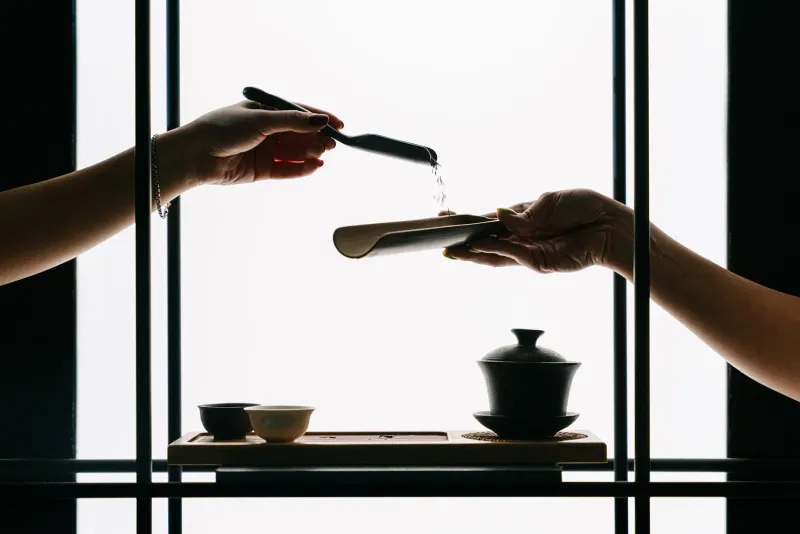
But in Japanese communication, the equivalent of a compliment is often something slower and less direct — noticing, remembering, returning. It might look like asking a thoughtful follow-up question about someone's project weeks later, or quietly refilling someone's tea before they ask. These gestures say something without making anyone the center of attention.
This is part of what makes learning Japanese — or spending real time in Japanese communities — so disorienting for Americans at first. The feedback loop you're used to just doesn't fire the same way. You give, and the response feels muted. You start to wonder if you're doing something wrong.
You're not doing something wrong. You're just learning a new rhythm.
What This Actually Teaches Us About Ourselves
Here's the thing about untranslatable words: they're not just linguistic curiosities. They're windows into what a culture quietly believes is true about people.
Hazukashii tells you that being seen can feel like a vulnerability, not just a victory. Kenson tells you that standing out from the group isn't automatically desirable. Kitanai tells you that care and presentation are social acts, not just personal ones.
And when Americans sit with those ideas — really sit with them, not just file them under "interesting cultural difference" — something useful tends to happen. We start to notice how much of our own communication is built on visibility. On being acknowledged. On having our effort named out loud.
That's not a flaw. But it's worth knowing it's a choice — one shaped by culture, not just human nature.
So What Do You Do With This?
You don't have to stop giving compliments. Honestly, many Japanese people living in or engaging with American culture appreciate directness and have adapted to it. This isn't about following a rigid rulebook.
But if you're building relationships across cultural lines — whether that's a Japanese coworker, a language exchange partner, a neighbor, or someone you met through a community like this one — it helps to expand your toolkit.
Try noticing instead of announcing. Try asking instead of praising. Try following up later instead of making a moment of it now.
And if someone deflects your compliment with a quiet "Mada mada," maybe don't push back. Maybe just nod, and let the conversation keep moving.
That small gesture? In a lot of ways, it's the compliment.