Nobody Asked — And It Felt Like a Relief
There's a particular kind of exhaustion that comes from being asked how you're really doing.
You know the version. Not the passing "hey, how's it going" that requires nothing more than a nod. The version where someone leans in, tilts their head, and waits. Where not answering feels like a social failure. Where the unspoken rule is: you owe me something personal here.
For a lot of Americans, that dynamic is just... Tuesday. It's baked into how we socialize, how we build trust, how we signal that we care about someone. Openness equals closeness. Sharing equals safety. And if you don't want to talk about your anxiety, your relationship, or why you've seemed a little off lately — well, that's suspicious.
But spend time around Japanese communication norms, or talk to Americans who've worked or lived alongside Japanese colleagues and friends, and you start to hear a different story. One where the absence of that pressure isn't coldness. It's actually a kind of care.
The Thing Nobody Warned You About
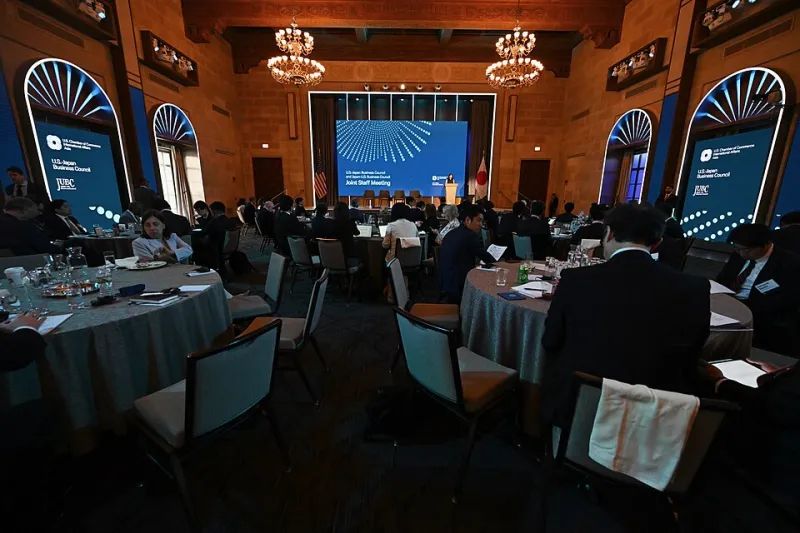
Americans who encounter Japanese workplace culture for the first time often brace for the stuff they've heard about: the hierarchy, the formality, the indirect communication. What they don't expect is how unbothered they'll feel about their personal life.
Coworkers don't ask about your divorce. Acquaintances don't want to know about your therapy. Nobody at the office is doing a casual emotional check-in over lunch. And for some Americans — especially those who've felt drained by the relentless intimacy expectations of American social life — that absence lands like a breath of fresh air.
"I didn't have to explain myself," one American woman who worked in Tokyo for two years described in an online forum. "Nobody needed my backstory to be nice to me. It was the first time I realized how much energy I'd been spending just managing other people's curiosity about my life."
That's not a small thing. Managing other people's curiosity is a real cognitive and emotional load — one so normalized in American culture that most people don't notice it until it's gone.
Privacy as Respect, Not Distance
In Japan, keeping personal matters personal isn't a sign of emotional unavailability. It's closer to the opposite — it's a form of respect. The assumption is that people have an interior life that belongs to them, and that prying into it uninvited is an imposition, not a connection.
This runs counter to a deeply American instinct. In the U.S., vulnerability has been elevated almost to a civic virtue. We've got a whole culture built around the idea that opening up — to friends, to strangers at a dinner party, to your Instagram followers — is how you become real, relatable, trustworthy. Keeping things private can read as guarded, cold, or even dishonest.
But here's what that framing misses: not everyone experiences unsolicited emotional probing as warmth. For plenty of people, being asked to perform openness on someone else's timeline feels like a boundary violation dressed up as intimacy.
Japanese social norms, in contrast, tend to operate on a model where closeness is earned slowly and privacy is the default — not something you have to justify or defend. You share when you're ready, with people you've genuinely chosen. The burden isn't on you to prove you're not hiding something.
What Americans Are Actually Craving
This isn't really about Japan being "better" at communication. It's about what happens when Americans encounter a completely different set of assumptions — and realize their own defaults weren't inevitable.
A lot of Americans describe something specific when they talk about the relief of Japanese-style social distance: they feel less performed. In American social settings, there's often an implicit expectation to be emotionally legible at all times. To have a feeling, name it, share it, and invite others to respond. It's a whole performance of interiority, and it's exhausting if it doesn't come naturally to you.
When that expectation lifts, something interesting happens. People report feeling more like themselves — not less connected, but differently connected. Connected through shared activity, through humor, through the slow accumulation of time spent together, rather than through the fast-track of emotional disclosure.
That's actually how a lot of deep friendships work, even in America. You don't necessarily become close to someone because they asked you probing questions on day one. You become close because you kept showing up, kept sharing small moments, kept existing in each other's orbit until something real developed.
The Intimacy We Don't Talk About
There's a kind of intimacy that exists in not asking. In trusting that the other person will tell you what they want you to know, when they're ready. In not treating someone's silence as a problem to be solved.
For Americans who've felt over-asked, over-exposed, or just plain tired of the emotional labor that comes with American-style social bonding, this idea can feel almost radical. You mean I don't have to explain myself? You mean the relationship can just... exist, without a constant accounting of my inner state?
Yes. That's exactly what it means.
And it raises a question worth sitting with: How much of what we call "openness" in American culture is actually about the person sharing — and how much is about the person asking, filling a silence, asserting a kind of social authority over someone else's narrative?
That's not a comfortable question. But it's a useful one.
So What Do We Do With This?
Nobody's saying Americans should stop asking how their friends are doing. Connection matters. Emotional availability matters. The impulse to check in on people you care about is a good impulse.
But there's a version of that impulse that's less about care and more about habit — or even entitlement. The assumption that someone's inner life is available for you to access, on your schedule, because you asked.
What Japanese communication culture offers, at its best, is a reminder that restraint can be generous. That leaving space — real space, not just polite space — for someone to come to you on their own terms is its own kind of respect.
And sometimes, the most comforting thing someone can do is simply not ask.
Not because they don't care. But because they trust you enough to wait.