There's a Japanese Word for What You're Doing in Group Chats — And It's Not a Compliment
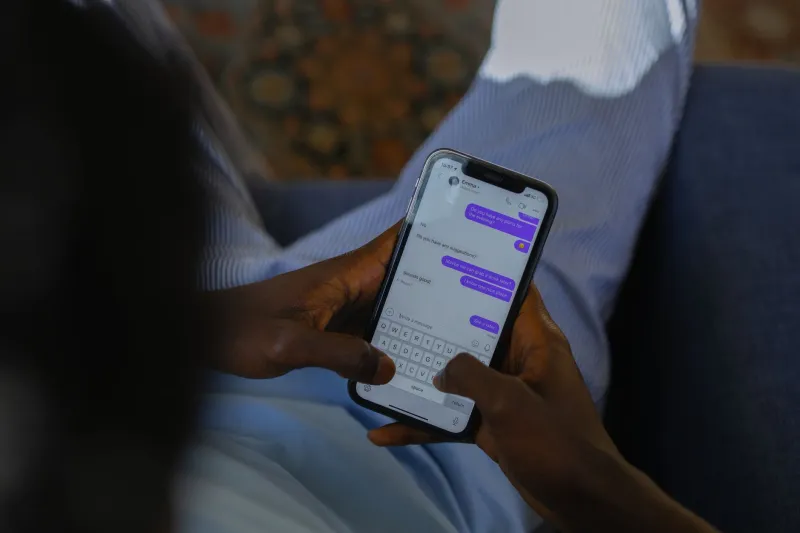
You've probably been in a group chat that felt like a traffic jam. Everyone's talking, nobody's listening, and somehow the original question gets buried under seventeen thumbs-up reactions and three separate people saying "lol same" at different times. If you're American, this might just feel like... a normal Tuesday.
But if you've ever been in a group chat with Japanese colleagues or friends, you may have noticed something different. A kind of rhythm. A sense that people wait, read, and then respond — instead of firing off the first thing that comes to mind.
There's actually a word in Japanese culture for what disrupts that rhythm. And once you hear it, you'll start spotting it everywhere.
The Concept: 空気を読む (Kuuki wo Yomu) — And Its Shadow
Most people who've spent time studying Japanese communication have come across the phrase kuuki wo yomu — literally "reading the air." It refers to the social skill of sensing the unspoken mood of a room (or a conversation) and adjusting your behavior accordingly.
But there's a flip side that doesn't get talked about as much: KY, which stands for kuuki yomenai — someone who can't read the air. It's shorthand, the kind teenagers coined and that quietly spread into everyday use. And while it's not always said harshly, it carries a real sting. Being called KY means you've missed something everyone else picked up on — something that didn't need to be said out loud, but somehow you said it anyway, or did it anyway, or just barreled through when everyone else was holding back.
In a group chat context? That looks very familiar to a lot of American communication habits.
What This Actually Looks Like in a Thread
Let's get specific, because this isn't abstract.
Imagine a work Slack channel. Someone posts a question about an upcoming project deadline. In an American-style team, you might see:
- Three people responding simultaneously with different answers
- Someone cracking a joke before the question is fully addressed
- A long message from one person that essentially restates what the last two people said
- Someone tagging the boss before the group has had a chance to sort it out themselves
- A reaction emoji flood that buries the actual content
None of this is mean. Nobody's being rude on purpose. But from a Japanese communication standpoint, every single one of those moves could register as KY behavior — an inability to read what the group actually needs in that moment.
In Japanese digital spaces, there's often an implicit understanding that you observe before you jump in. You feel out whether your contribution adds something or just adds noise. You consider whether the group has reached a consensus before you weigh in with a dissenting take. Timing isn't just polite — it's communicative.
Why Americans Default to "First Draft" Communication
This isn't a personality flaw. It's cultural wiring.
American communication — especially in digital spaces — tends to reward speed and visibility. In a lot of American workplaces, being the first to respond signals engagement. Throwing out a half-formed idea is seen as collaborative, even creative. The culture of brainstorming, of "yes, and," of building out loud — all of that shapes how Americans show up in a group thread.
There's also the anxiety of the "seen" receipt. In American digital culture, silence often reads as disinterest or avoidance. So people fill it. Quickly.
Japanese communication culture tends to weight thoughtfulness over speed. A delayed response isn't necessarily a cold shoulder — it might mean someone is genuinely considering what to say. Jumping in before that consideration is done can feel like stepping on someone's thinking.
Neither approach is wrong. But when these two styles collide in the same group chat, things get awkward fast — and usually, neither side knows exactly why.
The Group Chat as a Social Space, Not Just a Tool
One of the bigger differences worth sitting with: in Japanese communication culture, a group chat isn't just a logistics tool. It's a social space with its own unspoken rules about harmony, hierarchy, and turn-taking.
Who speaks first matters. Who defers to whom matters. Whether you respond to the person above you in the thread before jumping to the main topic — that matters too.
For Americans used to flat, casual, everyone-at-once digital culture, this can feel overly formal or even unnecessarily complicated. But understanding it isn't about adopting every rule. It's about recognizing that your default isn't neutral — it's just yours.
When you understand the concept of KY, you start asking different questions before you hit send. Not "is this accurate?" but "is this needed right now?" Not "do I have something to say?" but "is this the moment to say it?"
A Small Shift That Changes a Lot
You don't have to overhaul your entire communication style. But if you're working with Japanese colleagues — or just trying to be a more intentional communicator in general — a few small adjustments can make a real difference.
Pause before piling on. If three people have already said something, ask yourself whether your version adds something genuinely new.
Let threads breathe. Not every message needs an immediate response. Especially in cross-cultural spaces, giving people time to formulate a thoughtful reply is a form of respect.
Read the room — even digitally. What's the tone of the thread so far? Is it formal or casual? Has a decision already been made, or is it still open? Matching that energy is its own kind of communication.
Watch for the shape of the conversation, not just the content. Who's spoken? Who hasn't? Sometimes the quietest person in the chat has the most to say — they're just waiting for the right moment.
The Takeaway
KY is one of those concepts that sounds simple until you really sit with it. It's not just about being polite. It's about recognizing that every conversation — even a chaotic group chat — has an atmosphere. A current. And some people are attuned to it, and some people aren't.
The good news is that kuuki wo yomu is a skill, not a personality trait. You can get better at it. And honestly, in a world of constant notifications and noise, the ability to read what a moment actually calls for — and act accordingly — sounds less like a Japanese cultural concept and more like a superpower.
So next time you're about to fire off a reply before you've even finished reading the thread: pause. Read the air. See what's already in the room.
You might be surprised what you find.