The Apology That Shows Up After Everything Is Already Fine
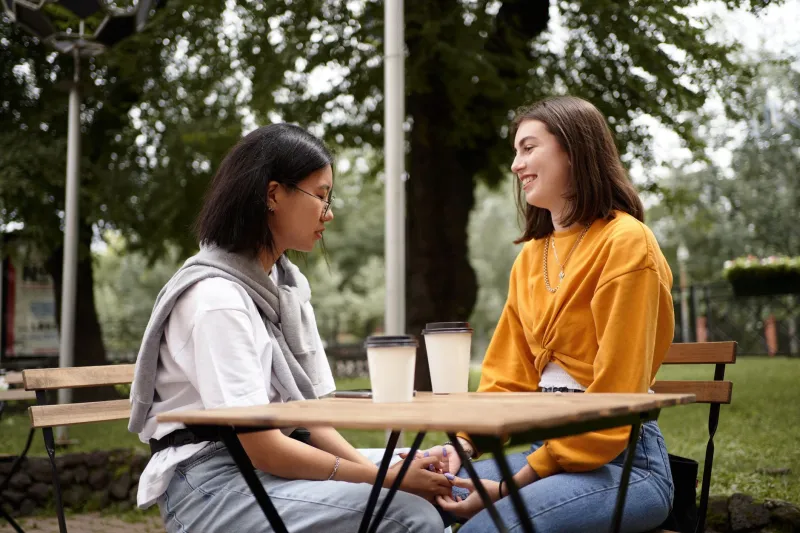
You had a disagreement. It wasn't fun, but you both talked it through. Apologies were made, things were acknowledged, and you moved on — or so you thought.
Then, a few days later, they bring it up again. Not to relitigate. Not because they're still upset. Just to say: "I'm still sorry about what happened. I've been thinking about it."
If you're American, your brain might short-circuit a little here. Didn't we already do this? Are they trying to make me feel guilty? Is something still wrong?
None of the above, actually. What you just witnessed is one of the most misread patterns in Japanese communication — and once you understand what it's actually doing, it changes how you hear it completely.
Why Americans Treat Apologies Like Receipts
In American culture, an apology functions a lot like a transaction. Something goes wrong, an apology is issued, it's accepted, and the account is settled. Done. Moving on.
This isn't cynical — it reflects a genuine cultural value around resolution and forward momentum. Americans tend to feel uncomfortable dwelling on conflict once it's been addressed. Bringing it back up risks reopening something that's already closed, or worse, suggesting that the original apology wasn't enough.
So when someone apologizes again after the situation has already been resolved, the American reading is often: Are they not over it? Did I not forgive them properly? Is this passive-aggressive?
None of those interpretations are accurate in the Japanese context. But they're completely understandable, because the cultural framework underneath the behavior is totally different.
The Apology Isn't About the Incident Anymore
Here's the key shift: in Japanese communication, the second (or third) apology isn't really about the original disagreement. It's about the relationship.
When conflict happens — even minor conflict, even conflict that gets resolved cleanly — it creates a kind of social disruption. The harmony that existed between two people gets disturbed. And in Japanese culture, that disturbance doesn't automatically repair itself the moment both parties say the right words.
The follow-up apology is a way of tending to the relationship itself, separate from the resolution of the specific issue. It's saying: "I'm aware that what happened affected us, not just the situation. And I'm still thinking about that."
This connects to a deep cultural concept around wa — harmony — and the ongoing, active effort required to maintain it. Harmony isn't a default state you return to automatically. It's something you rebuild, sometimes slowly, through small continued gestures.
What It Feels Like From the Inside
For the person offering the repeated apology, there's often a genuine emotional experience happening that Americans might not immediately recognize.
In Japanese culture, there's a strong awareness of how your actions affect others — not just in a direct cause-and-effect way, but in terms of the emotional atmosphere you create around you. When someone has caused friction, even accidentally, even in a situation that's already been resolved, they may continue to feel the weight of that for a while.
The follow-up apology is partly an expression of that ongoing awareness. It's not guilt-tripping. It's not performative. It's a genuine acknowledgment that the ripple effect of the conflict didn't disappear the moment the words "I'm sorry" were exchanged.
Think of it less like reopening a wound and more like checking on a bruise — not because it's still an emergency, but because you're still paying attention.
Why This Pattern Is Especially Visible in Friendships and Work
You'll notice this behavior most clearly in two contexts: close personal relationships and professional settings.
In friendships, the continued apology often surfaces in a quiet, almost offhand way. Maybe during a casual conversation, someone says: "I keep thinking about what I said last month. I really am sorry about that." It's not dramatic. It's not a big moment. But it's deliberate.
In the workplace, this pattern can look slightly different — more formal, sometimes written. A follow-up email that references a past misunderstanding, not to relitigate it, but to acknowledge it again. Americans often read this as unnecessary, even a little awkward. But for Japanese colleagues, sending that email is a way of signaling: We're okay. I'm still thinking about our relationship, not just the project.
How to Respond Without Making It Weird
If you're on the receiving end of a post-resolution apology and you're not sure how to respond, here's the good news: you don't have to match the emotional register.
A warm, genuine acknowledgment is plenty. Something like "I really appreciate you saying that — we're completely good" goes a long way. The goal isn't to have another full conversation about the conflict. It's just to receive the gesture and confirm that the relationship is intact.
What you want to avoid is brushing it off in a way that feels dismissive — like "You already apologized, it's fine, stop bringing it up." Even if that's your honest internal reaction, that response can land as a rejection of the relational gesture, not just the apology itself.
The Longer View
There's something kind of remarkable about a communication culture that doesn't treat conflict resolution as a checkbox. The idea that a disagreement leaves a trace — and that trace deserves attention even after the formal resolution — reflects a deep respect for what relationships actually are.
They're not just a series of interactions. They're living things that can be damaged and repaired, and the repair sometimes takes longer than the resolution.
Next time someone apologizes to you after you thought everything was already settled, try receiving it for what it is: not a problem, not a redo, not a red flag. Just someone making sure the two of you are still okay — and caring enough to say so twice.