What Happens When Americans Walk Into a Japanese Convenience Store for the First Time
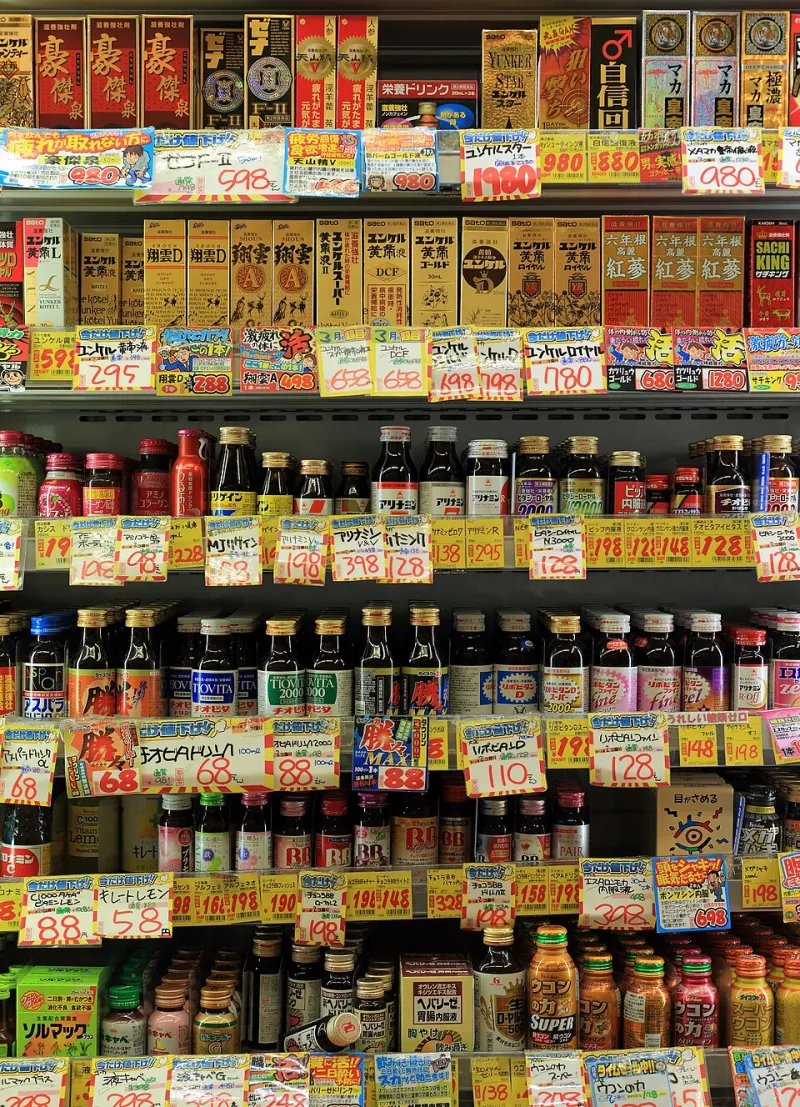
Photo: Martin Falbisoner, CC BY-SA 4.0, via Wikimedia Commons
There's a specific kind of culture shock that doesn't hit you at the temple or the bullet train. It hits you at 11 PM, slightly jet-lagged, standing under fluorescent lights in a FamilyMart somewhere in Osaka, holding a perfectly triangular rice ball wrapped in a sleeve so cleverly engineered it practically opens itself. You think: why don't we have this back home?
If you've spent any time in Japanese-American travel communities, expat forums, or even just scrolling through certain corners of TikTok and Reddit, you already know this feeling is practically universal. The Japanese convenience store — the konbini — has become a full-blown cultural phenomenon among American audiences. And honestly? It deserves every bit of the hype.
More Than a Gas Station Snack Run
Let's be real about what American convenience stores typically offer. A wilting hot dog rotating under a heat lamp since 9 AM. Energy drinks in flavors that sound like they were named by a 14-year-old. Maybe a wall of chips if you're lucky. The experience is purely transactional — you go in, you grab something out of desperation, you leave.
Japanese konbini operate on a completely different philosophy. Chains like 7-Eleven Japan, Lawson, and FamilyMart function more like neighborhood anchors than pit stops. You can pay your utility bills there. Pick up concert tickets. Send a package. Print documents. And somewhere between all of that, you can grab a genuinely delicious meal — freshly made sandwiches with the crusts cut off, steaming nikuman (pork buns) from a warmer by the register, seasonal onigiri with fillings that rotate based on what's good right now.
The food alone tends to short-circuit American expectations. Hot foods are actually hot. Cold foods are actually cold. The egg salad sandwich — and yes, this is a whole conversation that happens in every travel group — has a texture and flavor that people describe with an almost embarrassing level of reverence.
The Aesthetic That Launched a Thousand Instagram Posts
Part of what's driven the konbini obsession online isn't just the food — it's the feeling of the place. Japanese convenience stores are clean in a way that feels intentional rather than incidental. The layout is logical. The packaging is considered. Even the plastic wrap on a rice ball has a kind of visual coherence that makes you feel like someone, somewhere, cared deeply about your experience of opening it.
For American audiences raised on chaotic retail environments and the general sense that nobody is particularly invested in whether you have a good time, this hits differently. There's something almost emotional about being in a space that seems designed to respect your time and your senses simultaneously.
Social media has amplified this feeling into a full aesthetic movement. Searches for "Japanese convenience store food" and "konbini haul" pull up millions of videos, many of them from Americans either visiting Japan or desperately trying to recreate konbini snacks at home. Japanese-American grocery stores in cities like Los Angeles, New York, and Seattle have reported increased demand for konbini-style products. Some American entrepreneurs have even tried — with mixed results — to open konbini-inspired shops stateside.
What We're Actually Hungry For
Here's where it gets interesting, and it's the conversation that keeps coming up in communities like ours at そうだん.net. When Americans talk about what they love about konbini culture, they're rarely just talking about the snacks. They're talking about something harder to name.
They're talking about the experience of a public space that doesn't feel hostile or neglected. They're talking about affordable food that doesn't make you feel bad about eating it. They're talking about efficiency that somehow doesn't feel cold — the staff at a Lawson at 2 AM in Tokyo are, famously, still polite and professional in a way that would be unthinkable in most American late-night retail situations.
In a country where "convenience" has become synonymous with cutting corners, the konbini represents something genuinely aspirational: the idea that everyday, mundane experiences can be done with care. That a rice ball is worth engineering properly. That a cup of coffee from a machine can still be worth drinking.
The Expat Community Effect
For Americans living in Japan — a community that's grown steadily over the past decade — the konbini often becomes a kind of emotional anchor. In expat forums and community threads, people write about their "regular" konbini the way you'd write about a neighborhood diner back home. They know which location has the best oden in winter. They have opinions about which chain's egg salad sandwich is superior (Lawson, for the record, wins a lot of these debates).
When these expats return to the US, the konbini nostalgia hits hard. It's one of the most commonly cited things people miss — not just the food, but the whole ecosystem of it. The reliability. The seasonal anticipation. The sense that the store is genuinely trying to be good at what it does.
Can America Ever Have This?
This question comes up constantly, and the honest answer is: probably not in the same form. The konbini model is deeply tied to Japanese urban density, cultural expectations around service, supply chain infrastructure, and a food culture that takes quality seriously even at the most casual level. You can't just import the packaging and expect the same experience.
But that doesn't mean there's nothing to learn. Some American cities are seeing the rise of better-quality grab-and-go food options. Japanese grocery chains with konbini-style sections have found loyal followings wherever they've opened. And the conversation itself — the one happening in travel communities, on food forums, in places like this — matters. Because talking about what we wish our everyday spaces looked like is how we start to demand better ones.
The konbini obsession isn't really about Japan. It's about what we're missing, and the quiet hope that it's possible to do ordinary things extraordinarily well.
Have you visited a Japanese konbini, or tried to find something similar in the US? Drop your thoughts in the comments — みんなで話そう, let's talk about it together.